

Why So Many Fathers Feel Invisible in Their Own Family

 Facebook
What does it mean for a father to feel invisible?
There comes a moment in many fathers’ lives when something quietly shifts. Nothing dramatic happens. No argument. No clear turning point. Just a growing sense that you’re present everywhere, yet somehow no longer fully seen. It’s often in this space that fathers begin questioning everything, even choices they once felt certain about.
You think back to life before the baby arrived. The couple you were. The balance you had. The closeness that felt effortless. You remember how much you wanted this child, how intentional the decision was. And yet, alongside love and responsibility, something else enters the picture. A sense of loss you didn’t expect, and didn’t feel allowed to name.
After a baby is born, the focus naturally shifts. What once revolved around the couple now revolves around the child. What used to feel harmonious can suddenly feel chaotic, not because something is wrong, but because everything is new and demanding at the same time. In that transition, many fathers begin to fade into the background emotionally. Not intentionally. Not maliciously. Just gradually.
Invisibility doesn’t mean no one needs you. In fact, it often means the opposite. You’re relied on constantly. You’re expected to provide, to stabilize, to absorb pressure without complaint. Over time, that role can quietly turn you into someone who is essential but rarely acknowledged. Someone whose emotions feel secondary. Someone taken for granted.
This sense of invisibility doesn’t stop at home. It spreads outward. Friends drift away, often without conflict. Social circles shrink. Many dads lose most of their friendships after becoming fathers, not because they want to, but because time, energy, and emotional space disappear. Unlike women, who often maintain social bonds across different life contexts, men tend to build trust slowly and selectively. Those bonds require time, shared experience, consistency. Fatherhood removes much of that.
And so the circle tightens. Work, family, responsibility. Bills to pay. Food on the table. Stability to maintain. Somewhere in all of that, a father’s inner world becomes less visible, even to himself. His feelings matter less, not because they are unimportant, but because there is simply no space left for them.
Why invisibility grows quietly after becoming a dad
What makes this especially difficult is that invisibility doesn’t belong to just one phase of fatherhood. It evolves.
Some fathers experience it intensely right after the birth of their first child. Others believe they’ve moved past it, that they’ve found a new balance, a new identity, a new way of existing within the family. And for a while, that may be true. There is a sense of purpose. Of being needed. Of learning the role.
But then, quietly, invisibility can return in a different form.
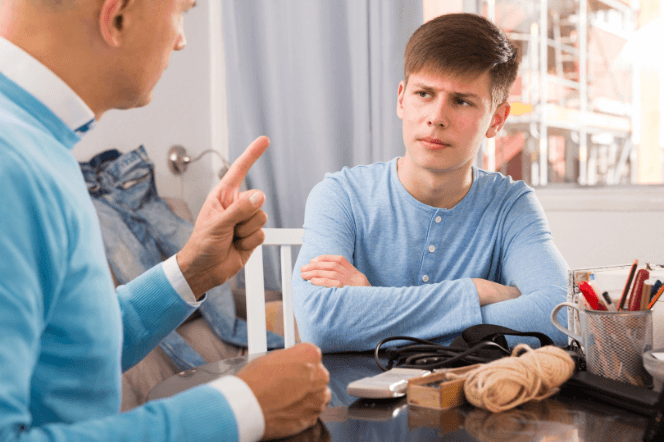
As children grow, fathers often enter a new stage where they are still responsible, still present, but less central. The child you once held constantly now pulls away. The time and emotional energy you poured into raising them begins to feel less visible in return. Teenagers, in particular, start seeing themselves as independent, even when they are not. Fathers can suddenly feel outdated, misunderstood, or emotionally irrelevant.
This stage hurts in a different way. Early fatherhood invisibility comes from being overwhelmed. Later invisibility comes from being sidelined. You’re still needed, but no longer noticed. Still responsible, but less consulted. Still there, but no longer at the center of your child’s emotional world.
And because this transition is framed as “normal,” fathers often feel they have no right to grieve it. They tell themselves this is just how parenting works. That distance is healthy. That they should be proud.
Many respond by quietly learning to bottle up stress, assuming that naming it would only make them seem weak or ungrateful.
But emotionally, something feels unfinished. Like being quietly moved from the main role to the background without anyone acknowledging the shift.
How feeling invisible affects a father’s mental health
When invisibility persists, it doesn’t stay contained. It shapes how fathers feel about themselves.
Many dads describe a gradual emotional flattening. Not sadness exactly, but a muted sense of self. Less joy. Less motivation. Less connection to who they used to be. They may still love deeply, but from a distance. They may still show up physically, but feel emotionally disengaged.
Invisibility often feeds loneliness. Not the kind that comes from being alone, but the kind that comes from not being seen. This overlaps closely with what we explored in The Loneliness No One Talks About in Fatherhood, where many dads describe feeling emotionally isolated even inside their own families.
Over time, this internal disconnect can turn into burnout. Constant responsibility without recognition wears down emotional resilience. Fathers may become irritable, withdrawn, or exhausted without understanding why. They may blame themselves, their partner, or their circumstances, without realizing that the deeper issue is emotional erasure.
Psychological research consistently shows that when emotions are ignored or suppressed over long periods, stress levels increase rather than decrease. The body keeps score, even when the mind tries to stay strong. This is why invisibility isn’t just a feeling. It’s a mental health risk.
What actually helps fathers feel seen again
There is no quick fix for invisibility. No checklist. No single conversation that suddenly restores balance. What helps is slower and more uncomfortable, but also more real.
For many fathers, the first step is allowing themselves to admit the feeling without immediately judging it. Recognizing invisibility as a signal, not a failure. A sign that something human needs attention, not suppression.
Being seen again often starts outside the family. With other fathers. With people who don’t require explanations. Who understand the emotional weight of responsibility without needing it spelled out. Shared experience creates safety. And safety allows honesty.
It also helps to reclaim small pieces of identity. Not as an escape from fatherhood, but as a reminder that you exist beyond your role. A conversation where you’re not only a provider. A moment where your thoughts matter. A space where you’re allowed to speak without being needed.
This is why father-focused communities matter. Not because they solve everything, but because they interrupt invisibility. They remind men that their inner lives still count. Platforms like DadConnect were created for exactly this reason: to give fathers a space where being honest doesn’t feel like a burden.
It often doesn’t feel dramatic when it happens.
It feels like standing in the kitchen after everyone has gone to bed, lights half off, scrolling through your phone without really reading anything. Like sitting in the car a few minutes longer than necessary before going inside, just to enjoy the quiet. Like realizing that an entire day has passed without anyone asking how you’re doing, and not knowing whether you would have answered honestly if they had.
Nothing is technically wrong in those moments. Life is moving forward. Your family is there. Your role is clear.
And yet, something feels absent.
That absence doesn’t announce itself as pain. It shows up as distance. As a subtle sense of being replaceable in the emotional landscape of your own life. Not because you don’t matter, but because you’ve learned to take up less space.
Most fathers don’t talk about this. They simply adapt to it. They keep going. They stay useful. They stay needed.
And maybe that’s why invisibility in fatherhood is so hard to notice at first. It doesn’t arrive like a crisis. It arrives quietly, in ordinary moments, when everything is finally still.
Similar Blog

The Provider Pressure: When Being “The Strong One” Starts Breaking You
The pressure to provide financially weighs heavily on many fathers. This article explores the emotional cost of provider stress and how dads can balance work and family without breaking.
Read more
How to Stop Yelling at Your Kids as a Dad
Many fathers yell more than they want to and feel guilt afterward. This article explains why yelling happens and how dads can regain emotional control without feeling weak.
Read more
Anger Issues in Dads – Why Fathers Struggle With Anger & How to Stop
Many fathers struggle with anger but don’t understand where it comes from. This article explores why anger shows up in dads, how it affects families, and how to break the cycle.
Read more