

Why Co-Parenting Feels So Hard for Fathers After Divorce

 Facebook
Co-parenting is often described as a practical solution, but emotionally it represents a profound shift in how fatherhood is lived. For many men, the hardest part is not the organisation of time, but the transformation of daily presence into scheduled moments, and the way this alters the sense of continuity with their children. What once felt natural becomes intentional, and what once felt stable begins to feel fragmented, even when the relationship with the child remains strong.
In the months following separation, fathers frequently experience a sense of disorientation that is difficult to articulate. The home alternates between fullness and emptiness, routines are interrupted, and the ordinary moments that once defined family life become less frequent. This transition often carries a quiet form of grief, not for the child, but for the version of fatherhood that no longer exists in the same way.
Research on post-divorce family dynamics, including work published by the American Psychological Association, highlights how changes in parental roles and ongoing conflict increase emotional strain for both parents and children. This broader context helps explain why many fathers feel a sustained emotional pressure that goes far beyond logistical concerns.
The emotional cost behind the logistics
Although co-parenting appears to be about coordination, its emotional burden lies in responsibility without full visibility. Fathers often care deeply about decisions that are made in the other home, yet have limited influence over them. Over time, this creates a constant state of emotional alertness, where concern is present but control is not, and where stability feels difficult to achieve.
This experience connects closely with the emotional invisibility many dads report, a dynamic explored further in our article on How Fathers Begin to Feel Invisible in Their Own Family
Why communication becomes so difficult
After separation, communication is no longer about partnership, but about coordination under emotional constraints. Conversations are shaped by past conflicts, unspoken resentment, and the need to remain functional rather than open. Many fathers begin to measure their words carefully, not to avoid involvement, but to avoid escalation, and over time this can lead to emotional withdrawal.
Psychological literature on co-parenting stress shows that high-conflict communication patterns significantly increase parental burnout and emotional distress, a dynamic discussed in various family psychology studies and reviews.
The fear fathers rarely say out loud
Beyond the visible challenges lies a deeper concern that many fathers carry quietly. The fear of becoming secondary in their children’s lives, of being present but no longer central, and of watching their influence diminish as time becomes divided. This fear is not abstract; it is shaped by lived experience and by the structural realities of shared custody.
As children grow, this fear often changes form. Early on, it is about separation. Later, it is about relevance. Teen years, in particular, can intensify this feeling, as independence grows and emotional distance becomes harder to interpret.
Why support matters
There is no simple method that makes co-parenting easy, because it is not a problem to solve but a relationship to sustain. It requires emotional consistency without certainty and engagement without full control. Fathers benefit greatly from spaces where this complexity can be spoken about honestly, without being reduced to legal or purely practical terms.
DadConnect exists to offer that space, connecting fathers who are navigating separation, co-parenting, and the emotional demands that come with it.
A relationship that continues
Co-parenting does not offer closure. It is an ongoing process that unfolds over years, shaped by growth, conflict, adjustment, and moments of connection that do not always look the way fathers expected. And it is precisely this continuous, often invisible emotional effort that explains why co-parenting feels so hard for so many fathers after divorce.
Similar Blog
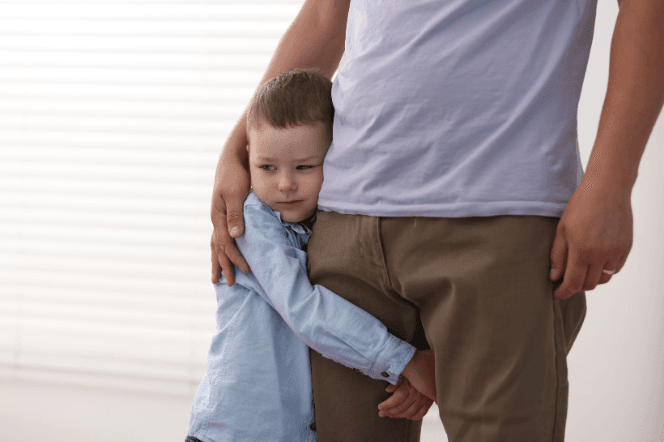
How to Protect Your Relationship With Your Kids After Separation
An in-depth exploration of how fathers can maintain strong emotional bonds with their children after separation and family restructuring.
Read more

The Emotional Cost of Custody Battles on Fathers
An in-depth narrative on the psychological and emotional toll that custody disputes place on fathers after separation.
Read more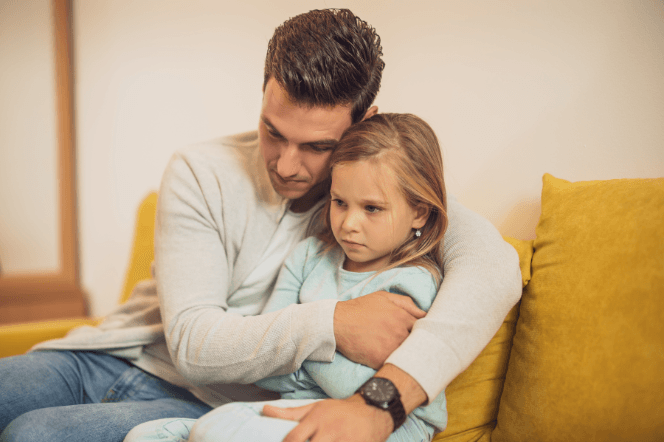
Parallel Parenting vs Co-Parenting: What Works When Communication Is Broken
A long-form exploration of parenting models after separation and how fathers can navigate high-conflict dynamics while staying emotionally present for their children.
Read more