
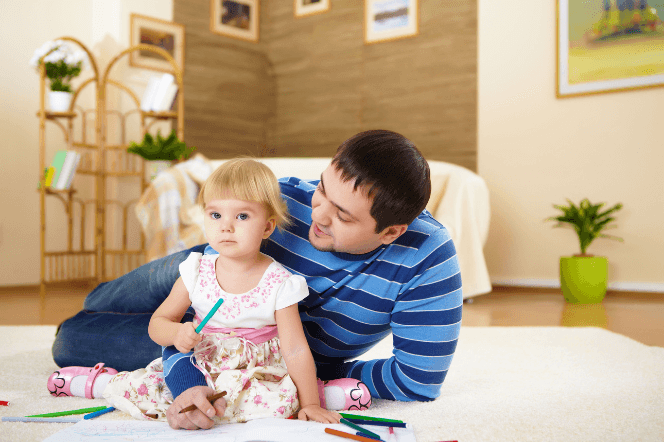
Father and child sitting together discussing rules

 Facebook
Discipline Without Shouting: A Dad’s Guide to Calm and Effective Parenting
Most fathers don’t plan to shout.
It usually happens after a long day, when patience is already thin and your child pushes one boundary too many. You ask once. Then twice. Then your voice rises almost without you noticing. The room gets louder, the moment sharper. For a second, you regain control — and almost immediately, you regret how it felt.
Shouting works in the shortest possible sense. It stops the behavior. But it rarely teaches anything. And most dads know that instinctively, even if they don’t always know what to do instead.
Learning how to discipline without shouting isn’t about being soft or permissive. It’s about staying present enough to guide your child without breaking the connection you’re trying to protect.
Why shouting feels effective — and why it quietly backfires
When a father raises his voice, the reaction is immediate. Children freeze, comply, or retreat. From the outside, it can look like control. But inside the child, something else is happening.
Shouting activates fear before understanding. Over time, kids don’t learn why a behavior is wrong — they learn to avoid the reaction. Some become anxious. Others mirror what they see and begin yelling when they’re overwhelmed themselves. Some stop listening altogether unless the volume rises.
Psychological research has consistently shown that harsh verbal discipline increases emotional distress and behavioral problems rather than reducing them, a pattern outlined clearly by the American Psychological Association in its review of discipline practices. The damage isn’t always loud or obvious. It’s cumulative.
And most dads feel it. That uncomfortable sense that the moment “worked,” but something meaningful was lost.
What discipline actually means for a father
The word discipline doesn’t mean punishment. It comes from disciple — to teach.
For fathers, real discipline is less about control and more about leadership. It’s about helping a child understand limits without feeling unsafe inside them. About modeling emotional regulation instead of demanding it. About staying firm without becoming threatening.
Children don’t learn self-control from being overwhelmed by someone else’s emotions. They learn it by watching how adults manage theirs.
When a dad remains calm while holding a boundary, he teaches something far more powerful than obedience. He teaches emotional stability.
Calm authority feels different — and children notice
There’s a difference children feel immediately.
A calm voice doesn’t mean a weak message. In fact, it often lands more clearly. When a father speaks slowly, makes eye contact, and stays grounded, kids sense confidence instead of chaos. They feel guided rather than cornered.
Calm authority communicates two things at once:
I’m in charge.
And you’re safe.
That combination builds trust. It turns moments of conflict into moments of learning instead of emotional standoffs.
What discipline without shouting looks like in real life
In practice, calm discipline isn’t dramatic. It’s often quieter than you expect.
It looks like lowering yourself to your child’s eye level instead of towering over them. Like using fewer words, not more. Like naming the behavior instead of labeling the child. “That’s not okay” lands very differently than “You’re being bad.”
It also means offering structure without negotiation overload. Limited choices. Clear consequences that are followed through calmly, without lectures or anger.
None of this works perfectly every time. But consistency matters far more than intensity. Children learn patterns faster than they learn rules.
The part dads rarely talk about: managing your own anger
This is where most advice falls short.
Fathers don’t shout because they want to. They shout because they’re carrying stress long before the conflict starts. Work pressure. Financial responsibility. Mental load. The constant need to stay composed.
When kids push limits, that pressure looks for an exit.
Pausing before reacting isn’t about suppressing anger — it’s about recognizing it early enough to redirect it. Sometimes that pause is one deep breath. Sometimes it’s stepping into another room for ten seconds. Sometimes it’s simply reminding yourself: my child isn’t attacking me — they’re learning.
How a father handles his own emotions becomes the blueprint his child will use later.
Discipline shapes emotional strength, not just behavior
When discipline is calm and fair, children don’t just learn rules. They learn how to regulate frustration. How to hear “no” without fear. How to express feelings without exploding.
Those skills don’t show up immediately. They develop quietly, over years. And they come not from perfect parenting, but from repeated moments of emotional safety.
Mistakes will happen. Every dad loses patience sometimes. What matters most is repair — returning to the moment, reconnecting, and showing that authority and care can coexist.
Why support matters for fathers who want to do better
Many dads are trying to parent differently than they were parented. That’s hard work to do alone.
Having a space to talk honestly about discipline, frustration, and self-control makes a real difference. Not for judgment. Not for “perfect parenting” advice. But for perspective.
That’s why communities like DadConnect exist — to give fathers a place to share real experiences, learn from each other, and remember that struggling doesn’t mean failing. It means you care enough to reflect.
Sometimes, knowing you’re not the only dad trying to stay calm in the middle of chaos is exactly what helps you do it.
Discipline without shouting isn’t about never raising your voice. It’s about what you build when you don’t.
Every calm correction strengthens trust.
Every clear boundary builds security.
Every moment you stay present teaches more than any rule ever could.
And long after the shouting would have faded, those lessons stay.
Similar Blog
Why Your Toddler Won’t Listen to Dad
Many fathers feel frustrated when their toddler ignores them but listens to others. This article explains why it happens and how to respond without damaging connection.
Read more
Why Toddlers Behave Differently With Dads | Father–Child Bond Explained
Many fathers notice their toddler behaves differently with them than with their mother. This article explains why that happens, what it says about attachment, and how dads can build a strong emotional bond during early childhood.
Read more
Why Kids Open Up More to Some Fathers Than Others
Children don’t open up because they’re told to. They open up when experience teaches them it’s safe. This essay explores why some kids talk freely with their dads and how everyday reactions quietly shape emotional openness.
Read more