

How Dads Create Emotional Safety for Their Children

 Facebook
How Dads Build Confidence in Their Kids (Without Pressure)
Most fathers don’t wake up in the morning thinking, Today I will build my child’s confidence.
It sounds too big, too abstract. And yet, that’s exactly what happens in the small moments we barely notice.
It happens when your child hesitates before climbing a step that looks too high and turns to you, searching your face. In that pause, there’s a quiet question hanging in the air: Do you think I can do this? And often, your answer isn’t what you say, but how you look at them. Whether your eyes say be careful or I’m right here, try.
Confidence begins there. Not in success, but in being allowed to try.
Where Real Confidence Starts
Real confidence doesn’t look like a child who’s never afraid or never unsure. It looks more like a child who feels safe enough to raise their hand, even when they might be wrong. One who dares to say what they think. One who falls, feels the sting, and still gets back up.
That kind of confidence grows quietly, over time, when a child learns that their effort matters more than their result, and that the person they trust most is steady beside them.
You see it in the way they struggle to tie their shoes and glance at you, waiting to see if you’ll step in. In the way they sound out words while reading, hoping you won’t rush them. In the way they insist, “Let me do it,” even when it would be faster if you took over.
Each time you hold back just enough to let them try, you’re sending a message that settles deep inside them: Dad believes I can handle this.
Research on child development shows that children build healthy self-esteem when caregivers respond consistently and supportively to their attempts, not just their achievements.
Over days and years, those moments stack up. And one day, you realise your child doesn’t look back as often. They still know you’re there. They just don’t need to check anymore.
The Voice They Carry Inside
Children don’t just hear what we say to them. They carry it.
Your words become part of the voice they hear when you’re not around. The voice that speaks when they’re nervous before a test, when they mess something up, when they wonder if they’re good enough.
If that voice sounds like, Take your time. You’ve got this. I’m proud of you for trying, then you’ve given them something that lasts far beyond childhood.
But if it sounds like, Don’t mess up. You should be better than this, then even love can start to feel like pressure.
Most dads don’t mean to pass on pressure. We want our kids to succeed. To have more chances than we did. To be strong in a world that doesn’t always feel kind. So we push, encourage, remind them of their potential.
And sometimes, without noticing, encouragement turns into expectation.
You see it when they lose and immediately look at you, searching your reaction. When their shoulders tense before they speak. When trying starts to feel like a test instead of an adventure.
That’s often when fathers pause. Because confidence doesn’t grow in a space where love feels tied to results. It grows where a child knows they can fail and still be held by your presence.
So you learn to change the language. Less “You can’t quit now.” More “That was hard, wasn’t it?” Less “You’re the best.” More “I love watching you try.” Not because you expect less, but because you want them to feel safe enough to become more.
Letting Them Struggle Without Letting Them Feel Alone
One of the hardest things as a dad is watching your child struggle when you know you could fix it in seconds.
You could tie the lace. Solve the puzzle. Step in and make the frustration disappear.
But every time you resist that urge, and instead stay close while they work it out, you’re giving them something far more valuable than an easy win. You’re teaching them: I can face this, and I’m not alone.
It’s not about standing back coldly. It’s about being there, quietly, while they wrestle with something just a little bigger than them.
It sounds like, I know this is frustrating. I’m right here.
It feels like sitting beside them while they calm down.
It looks like letting the tears come without rushing to wipe them away with solutions.
In those moments, they learn not just how to solve a problem, but how to stay with themselves when things are hard. That’s the kind of confidence that carries into life.
Presence Is Stronger Than Any Advice
As children grow, the way confidence is built changes too. There’s less carrying, more talking. Less fixing, more listening.
One day you realise your child doesn’t need you to solve the problem. They just need you to stay while they figure out how they feel about it.
That kind of presence isn’t loud. It doesn’t come with big speeches. It’s simply being there when they tell you about a bad day, a small fear, a quiet worry they don’t quite know how to name yet.
When you stay — even when you don’t have the answer — you’re teaching them something powerful: My feelings matter. I matter.
And that becomes the ground their confidence stands on.
How dads create emotional safety — and why they shouldn’t do it alone
No father really figures this out in isolation. Most of us are learning in real time, often questioning ourselves after the moment has passed. We carry a quiet mix of intention and uncertainty — wanting to be patient, wanting to be present, wanting to give our kids something steadier than what we may have received ourselves.
What helps isn’t having all the answers. It’s having places where doubt is allowed. Where conversations aren’t about being the perfect dad, but about being an honest one. Spaces where fathers can talk about the moments they’re proud of, and the ones they wish they’d handled differently, without feeling judged or diminished.
That’s what DadConnect was created for. Not to tell fathers how to parent, but to remind them they’re not alone in trying. When dads feel supported, they show up differently. Calmer. More grounded. More willing to pause instead of react. And that quiet shift is often what creates emotional safety for children in the first place.
Sometimes, the confidence our kids grow into begins with fathers realizing they don’t have to carry everything by themselves.
What your child carries forward
Years from now, your child probably won’t remember every boundary you set or every lesson you tried to explain in the moment. But they will remember how it felt to be around you.
They’ll remember whether home felt safe when emotions ran high. Whether mistakes were met with guidance instead of fear. Whether someone stayed steady when things were hard.
That sense of security becomes part of how they move through the world. How they trust themselves. How they handle frustration. How they speak to others when emotions rise.
And most days, you’re shaping that quietly — in ordinary moments, imperfect ones, the ones that don’t feel significant at the time. But they add up.
That’s how emotional safety is built. And that’s the kind of confidence that lasts.
Similar Blog
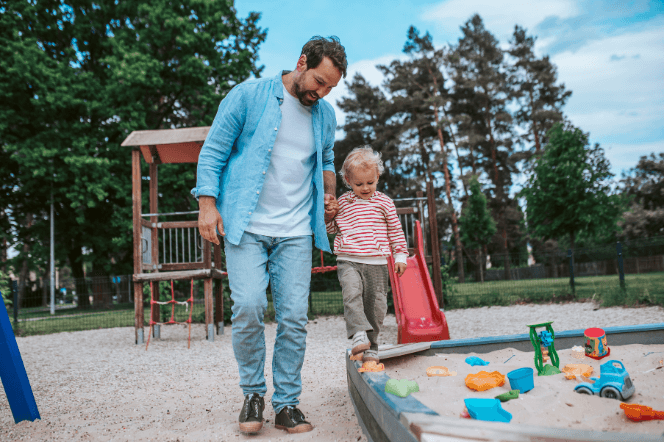
Why Your Toddler Won’t Listen to Dad
Many fathers feel frustrated when their toddler ignores them but listens to others. This article explains why it happens and how to respond without damaging connection.
Read more
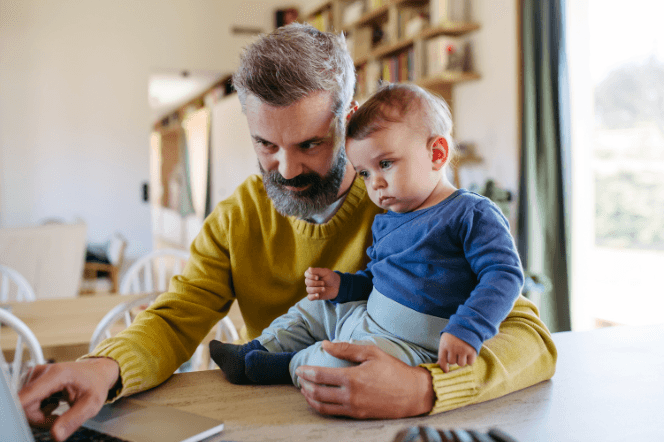
Why Toddlers Behave Differently With Dads | Father–Child Bond Explained
Many fathers notice their toddler behaves differently with them than with their mother. This article explains why that happens, what it says about attachment, and how dads can build a strong emotional bond during early childhood.
Read more
Why Kids Open Up More to Some Fathers Than Others
Children don’t open up because they’re told to. They open up when experience teaches them it’s safe. This essay explores why some kids talk freely with their dads and how everyday reactions quietly shape emotional openness.
Read more