
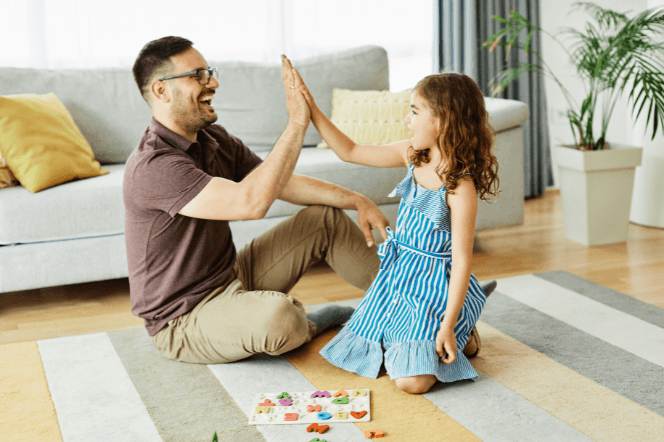
Tech-Free Family Time: Fun Screen-Free Activities for Kids

 Facebook
Why Tech-Free Family Time Matters More Than We Realize
Screens don’t arrive with bad intentions.
They slip into family life quietly. A tablet during breakfast. A phone while dinner is cooking. A TV on in the background because the house feels too quiet without it. Before long, screens become part of the rhythm of the day — especially for kids.
Technology isn’t the enemy. It entertains, teaches, distracts when distraction is needed. But when it starts replacing moments of real presence, something subtle shifts. Conversations shorten. Attention fragments. Laughter becomes quieter. And the moments that build connection slowly lose space.
That’s why more fathers are starting to notice the value of tech-free family time — not as a rule, but as a choice. A choice to step back into moments that don’t need to be recorded, optimized, or multitasked. Moments that simply need to be shared.
What happens when screens step aside
Children learn through interaction long before they learn through instruction. They read tone, body language, and attention more than words. When screens dominate shared time, those signals fade into the background.
When a dad puts the phone away and stays present, something changes. Kids feel it immediately. They feel noticed. Heard. Valued without having to compete for attention. Those moments don’t have to be long to matter — they just have to be real.
Research in child development consistently shows that excessive screen time can affect focus, sleep quality, and emotional regulation in children, especially when it replaces face-to-face interaction. The American Academy of Pediatrics has long emphasized the importance of balanced media use and meaningful parent-child engagement, particularly in early and middle childhood.
What screens often take away, presence gives back.
Why tech-free time matters just as much for fathers
This isn’t only about kids.
For fathers, screen-free moments create something rare in modern life: uninterrupted presence. No notifications. No divided attention. Just the experience of being there without doing anything else at the same time.
Many dads don’t realize how often they’re physically present but mentally elsewhere — still answering emails, still scrolling, still carrying work into family space. Tech-free time becomes a way to slow that momentum. To reconnect not just with their kids, but with themselves.
These moments often feel simpler than expected. And that’s their strength.
Where connection naturally happens without screens
Unplugging doesn’t require elaborate plans. It usually works best when it’s ordinary.
Outside, connection tends to happen almost by default. Walking through a park. Kicking a ball around. Sitting on the grass doing nothing in particular. Nature has a way of filling silence without demanding attention.
Indoors, the same principle applies. Board games. Cooking together. Drawing at the table. These activities don’t need to be impressive. They need to be shared. When screens aren’t competing, even small moments stretch longer than expected.
Creativity often shows up too. Kids invent stories. Ask unexpected questions. Turn boredom into imagination. And fathers get to witness parts of their children that rarely surface when a screen is doing the thinking for them.
How tech-free routines actually stick
The biggest mistake fathers make is aiming for perfection.
Tech-free time doesn’t work when it’s framed as deprivation. It works when it’s predictable and relaxed. One evening a week. Dinner without phones. A Sunday morning habit. Consistency matters far more than duration.
Children follow what they see more than what they’re told. When dads put their own devices away first, the message lands without needing explanation.
Over time, these routines become part of family identity — not rules, but shared expectations.
Why support makes this easier for dads
Being present sounds simple. In practice, it isn’t.
Work pressure, mental load, and constant digital demands make it harder than ever to slow down. Many fathers want to be more intentional with their time but struggle to translate that intention into habits.
That’s where connection with other fathers matters. Talking to dads who are trying the same thing. Sharing ideas that actually work in real households. Being reminded that slipping back into old patterns doesn’t mean you’ve failed.
This is exactly why DadConnect exists — as a space where fathers can exchange real experiences, talk openly about presence and distraction, and support each other in building stronger family bonds. Not perfectly. Just consistently.
Choosing connection, again and again
Tech-free family time isn’t about rejecting technology. It’s about choosing connection when it matters most.
Children may not remember every activity, but they remember how it felt to have your attention. To be listened to without interruption. To laugh without competing with a screen.
Those moments don’t disappear. They settle quietly into memory and become part of how kids understand relationships, safety, and belonging.
Start small. One shared activity. One evening. One habit that feels doable.
And over time, those moments become something much bigger than time without screens. They become the foundation of connection your child carries forward.
Similar Blog
Why Your Toddler Won’t Listen to Dad
Many fathers feel frustrated when their toddler ignores them but listens to others. This article explains why it happens and how to respond without damaging connection.
Read more
Why Toddlers Behave Differently With Dads | Father–Child Bond Explained
Many fathers notice their toddler behaves differently with them than with their mother. This article explains why that happens, what it says about attachment, and how dads can build a strong emotional bond during early childhood.
Read more
Why Kids Open Up More to Some Fathers Than Others
Children don’t open up because they’re told to. They open up when experience teaches them it’s safe. This essay explores why some kids talk freely with their dads and how everyday reactions quietly shape emotional openness.
Read more