

Becoming a Dad: What No One Tells You About the Emotional Shift

 Facebook
For many men, becoming a dad begins as an idea long before it becomes a reality. It lives in conversations, plans, jokes, and abstract expectations about the future. Even pregnancy, with all its visible changes, can still feel slightly distant, as if fatherhood is something you are preparing for rather than something you are already stepping into. Then, often suddenly, it stops being theoretical. The responsibility becomes real, permanent, and deeply personal.
This moment does not always arrive with clarity or confidence. Instead, it often brings a mix of pride, fear, excitement, and a quiet sense that life has irreversibly shifted. What many new fathers are surprised by is not the love they feel, but the emotional weight that accompanies it, a weight that does not always come with language or social permission to be expressed.
Why becoming a dad changes how you see yourself
Fatherhood is not just an added role; it reshapes identity. Men who become fathers often discover that the way they define themselves begins to shift in subtle but persistent ways. Priorities reorganize, risk feels different, and decisions suddenly carry longer timelines. Actions are no longer evaluated only by their immediate impact, but by how they might echo years into the future.
This identity shift can feel destabilizing, particularly in cultures where men are not encouraged to reflect openly on emotional transitions. Many fathers feel pressure to “step up” without being given space to process what that actually means for their sense of self. The result is often an internal tension between pride in the role and uncertainty about how to inhabit it.
The emotional pressure no one prepares you for
While becoming a dad is frequently framed as joyful, the emotional pressure that comes with it is rarely discussed with honesty. Alongside love and excitement, many fathers experience anxiety, self-doubt, and an overwhelming sense of responsibility. There is a growing awareness that someone depends on you completely, and that awareness can feel heavy rather than empowering at first.
Psychological research has shown that major life transitions involving responsibility and identity change significantly increase stress levels, especially when emotional expression is limited. The American Psychological Association has explored how new parental roles can affect mental health, particularly when expectations and reality collide.
When fear quietly replaces confidence
One of the least acknowledged aspects of early fatherhood is fear. Not dramatic fear, but persistent, low-level worry that runs beneath daily life. Fear of getting things wrong, of not being enough, of failing in ways that may not be immediately visible but could matter deeply over time.
This fear often exists alongside competence. Fathers may function well, provide stability, and meet responsibilities, yet still feel uncertain internally. Because this fear does not align with traditional images of fatherhood, it is frequently suppressed, which can lead to emotional distancing or chronic stress rather than resolution.
How expectations collide with reality
Many men enter fatherhood carrying inherited ideas of what a “good dad” should be. These expectations come from family history, media portrayals, and cultural narratives that emphasize strength, provision, and emotional control. Reality, however, often demands emotional availability, vulnerability, patience, and adaptability in ways that were never modeled.
This mismatch can create frustration and self-criticism, especially when fathers feel they are failing standards that were never clearly defined. Learning to release unrealistic expectations and redefine success on more human terms becomes a crucial part of the emotional transition into fatherhood.
Why this transition can feel lonely
Despite being surrounded by family, friends, and professionals during pregnancy and early parenthood, many fathers report feeling emotionally alone. Support systems often focus on the mother and child, leaving fathers with fewer spaces to process their own experience.
This sense of isolation is not about lack of care, but about lack of recognition. Fathers are expected to adapt quickly, provide support, and remain stable, often without being asked how the transition is affecting them internally. Over time, this can lead to emotional withdrawal rather than resilience.
The long-term impact of the early emotional shift
The emotional patterns established during the transition into fatherhood often persist. How a father learns to handle stress, fear, and responsibility early on influences how he relates to his child, his partner, and himself in the years that follow.
Research on child development emphasizes that parental emotional regulation plays a key role in children’s emotional wellbeing, a dynamic discussed by institutions such as the CDC.
Fathers who acknowledge and work through their own emotional transition are better equipped to offer consistent, emotionally safe relationships to their children.
Why fathers need space to talk about this
Becoming a dad should not be treated as a moment that requires instant adjustment without reflection. It is a profound psychological transition that deserves space, language, and support. Fathers benefit from environments where uncertainty is normalized, where emotional honesty is not mistaken for weakness, and where experience is shared rather than compared.
This is one of the reasons DadConnect exists: to give fathers a place to explore these experiences together, without pressure to perform or minimize what they are carrying.
Fatherhood as a process, not a switch
Becoming a dad is not a single moment of transformation, but an ongoing process of learning, adjustment, and emotional growth. Confidence develops over time, shaped by presence, reflection, and the willingness to remain engaged even when certainty is absent.
Understanding this does not remove the difficulty of the transition, but it reframes it. Fatherhood is not about having all the answers from the beginning, but about growing into the role with honesty, patience, and resilience.
Similar Blog
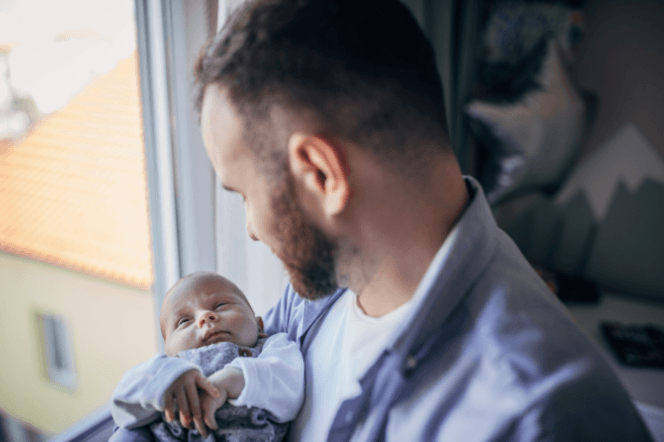
Scared to Be a Dad? The Fear of Becoming a Father Explained
Before the baby arrives, many men quietly wrestle with fear and anxiety about fatherhood. This article explores why that fear is normal and how to navigate it without shame.
Read more
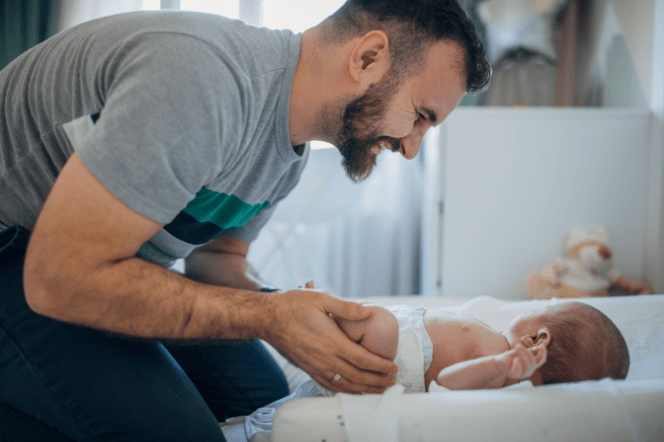
Becoming a Dad – How Fatherhood Changes You Emotionally
Many men are surprised by how deeply fatherhood changes them. This article explores the emotional, psychological and identity shifts that come with becoming a dad and how to navigate them with confidence and support.
Read more
When Becoming a Dad Changes How You See the World
A deep narrative on how becoming a father alters the way men experience time, responsibility, and meaning.
Read more