
The First Night as a Dad: When You Realize Life Has Changed Forever

 Facebook
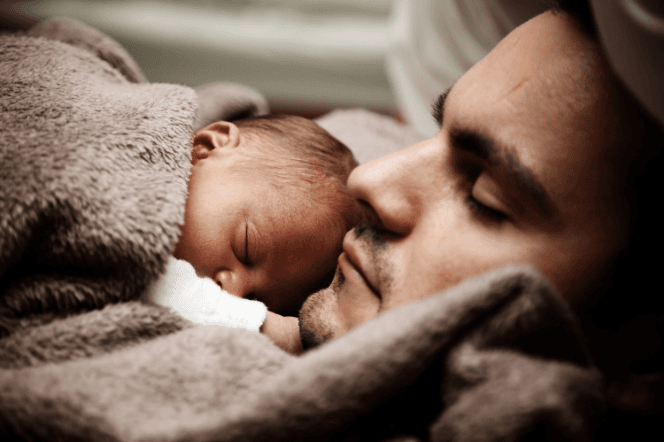
For many fathers, the first night as a dad does not arrive with fireworks or clarity. It arrives quietly, often after a day filled with intensity, adrenaline, exhaustion, and emotion. The room is dim. The hospital noises soften or the house finally settles. Your partner is asleep, the baby rests nearby, and for the first time since everything began, there is space to think.
It is in that quiet that reality lands.
Not as panic, not as joy alone, but as a deep, steady awareness that something fundamental has shifted. Life no longer feels theoretical or flexible. It feels anchored to another human being who depends on you in ways that cannot be postponed, ignored, or negotiated. That realization does not ask permission. It simply settles in.
Why this moment feels heavier than expected
Many men assume the emotional weight of fatherhood will arrive gradually, spread out over weeks or months. Instead, for some, it concentrates sharply in this first night. The responsibility suddenly feels permanent, not in a dramatic sense, but in a quietly undeniable one. You cannot “go back” to the version of life that existed before this moment.
This weight is not necessarily negative, but it is unfamiliar. It sits alongside pride and love, yet feels different from both. It is the understanding that your decisions, energy, patience, and presence now extend beyond yourself in ways that will shape another person’s life.
Psychological research on major life transitions shows that moments of sudden responsibility can trigger both emotional bonding and heightened anxiety, particularly when identity is shifting rapidly. The American Psychological Association has explored how becoming a parent often brings intense emotional processing in the early days, even when the experience is positive.
The unexpected mix of love and fear
The first night often brings an emotional contradiction that many fathers struggle to name. There is love, sometimes immediate and overwhelming, but there is also fear. Fear of doing something wrong, fear of not being enough, fear of the unknown stretches of time ahead.
This fear does not cancel out love. It exists alongside it. In fact, it often grows from the same source: the realization that something precious now depends on you completely. Because this fear does not fit traditional narratives of fatherhood, many men push it down, assuming it will disappear on its own. For some, it does. For others, it lingers quietly, shaping how they experience early parenthood.
How identity shifts in the middle of the night
The first night as a dad is often the moment when identity begins to reorganize internally. You may still look the same, speak the same, and move through the same physical world, but something underneath has changed. Priorities begin to reorder themselves without conscious effort. Risk feels different. Time feels different. The future feels closer.
This identity shift can feel grounding and destabilizing at the same time. Fathers may feel proud of the role they are stepping into while also feeling unsure about who they are becoming. Because this process happens internally, it is rarely acknowledged or discussed, even though it profoundly influences how men relate to fatherhood moving forward.
The silence that makes space for doubt
Silence has a way of amplifying thought. During the first night, doubts that were previously background noise can become more noticeable. Questions about competence, patience, and emotional readiness surface, often without clear answers.
These doubts do not indicate weakness. They indicate awareness. Yet many fathers interpret them as signs of inadequacy rather than natural responses to responsibility. Over time, unspoken doubt can turn into chronic self-criticism, especially in environments where fathers are expected to be confident from the beginning.
Why this moment is rarely talked about
Despite how common this experience is, it is rarely openly discussed. Conversations around early parenthood tend to focus on practical preparation, logistics, and visible challenges, leaving little room for emotional nuance. Fathers are often praised for being supportive without being asked how the transition is affecting them personally.
This lack of acknowledgment can make the first night feel isolating. You are surrounded by people, yet emotionally alone in processing the magnitude of what has just happened. This isolation is not intentional, but it is deeply felt.
How early emotional patterns carry forward
The way fathers interpret and respond to the emotional weight of the first night often sets patterns that persist. Fathers who allow themselves to reflect, seek support, and normalize uncertainty tend to develop more sustainable emotional strategies. Those who suppress or dismiss early emotional responses may find stress accumulating over time.
Research on child development consistently shows that parental emotional regulation plays a key role in children’s emotional safety and long-term wellbeing, a dynamic emphasized by organizations such as the CDC.
A father’s ability to be emotionally present for himself directly influences his capacity to be emotionally present for his child.
Why fathers need spaces that understand this transition
The emotional reality of early fatherhood deserves recognition. Fathers benefit from spaces where these moments can be shared without judgment, where fear does not disqualify love, and where uncertainty is treated as part of growth rather than failure.
This is why DadConnect exists: to create a place where fathers can speak honestly about these experiences, connect with others navigating the same transition, and grow into fatherhood together.
A night that quietly shapes the years ahead
The first night as a dad does not come with clear conclusions or immediate answers. It leaves you with awareness rather than resolution. Yet it is often this quiet awareness that shapes how fatherhood unfolds in the years that follow.
Life may not feel dramatically different in the morning, but something fundamental has already changed. And that change, though heavy at first, becomes the foundation upon which confidence, connection, and growth are built over time.
Similar Blog

Scared to Be a Dad? The Fear of Becoming a Father Explained
Before the baby arrives, many men quietly wrestle with fear and anxiety about fatherhood. This article explores why that fear is normal and how to navigate it without shame.
Read more

Becoming a Dad – How Fatherhood Changes You Emotionally
Many men are surprised by how deeply fatherhood changes them. This article explores the emotional, psychological and identity shifts that come with becoming a dad and how to navigate them with confidence and support.
Read more
When Becoming a Dad Changes How You See the World
A deep narrative on how becoming a father alters the way men experience time, responsibility, and meaning.
Read more